
We live in an era of constant connection, in which the volume of content we consume every day is enormous. Around the world, approximately 402.74 million terabytes (TB) of data are created, sent and consumed each day. More than 500 hours of video are uploaded to YouTube every minute, while TikTok receives around 16,000 videos every minute.*
Humanity collectively spends more than 15 billion hours a day on social platforms—or more than 25 million hours online every minute. But behind those hours lies more than simply free time: there are powerful technological mechanisms that use our need for information, entertainment and connection with others. Platforms are designed to hold our attention for as long as possible. When we understand these mechanisms, we can turn the tables—not allowing platforms to control us, but making conscious choices about what we see and what we share.
Because children’s brains and emotional regulation are still developing, children and young people are particularly vulnerable to the psychological traps of the digital environment. This is why it is critically important for them to be able to manage their behaviour through knowledge: they need to understand how platforms work so that they do not become passive consumers.
Here are the key features and algorithms that adults should understand—and explain to children.
Addictive Design and Infinite Scrolling
What it is: Deliberate interface design decisions that bypass rational thinking and keep the brain in a state of anticipation.
What it looks like online: An endless feed (infinite scrolling), automatically playing the next video, and the “pull to refresh” function, which mimics the mechanics of a slot machine.
Consequences: Losing track of time, lack of sleep, and anxiety caused by the fear of missing out (FOMO).
Echo Chambers and Rabbit Holes
What it is: Content-recommendation algorithms learn from every click we make—and, most importantly, from the amount of time we spend watching particular content. To keep us engaged, they begin offering more and more of the same, often in increasingly extreme forms*
What it looks like online: You watch one video featuring a conspiracy theory or an extreme opinion on a social issue, and soon your entire feed is full of similar videos, excluding every other point of view. Or you search for information about a particular incident and the algorithm draws you into a “rabbit hole” of more news of the same kind, including misinformation and fake news.
Consequences: Isolation from diverse perspectives, confinement within a specific “information bubble”, a distorted perception of reality, and increased susceptibility to manipulation.
Ragebait and the “Sting Rather Than Honey” Effect
What it is: Content deliberately created to provoke anger, outrage or shock. Algorithms know that the human brain reacts much more strongly to negative emotions—the “sting”—than to positive ones—the “honey”—because anger generates more comments and shares.
What it looks like online: Sensational headlines, aggressive pranks or scandalous statements. Typical examples also include content creators who thrive on conflict and negativity: so-called drama channels, hate reviews, rant videos and reaction channels that deliberately exaggerate and seek controversy.
They often make highly angry and extreme comments about products, films, events or other people, without objectivity or nuance. Everything is presented as black or white, with intense emotion and criticism. Algorithms love this because it creates an avalanche of user comments—far more than positive or emotionally neutral content does.
Consequences: The normalisation of rudeness and online bullying, as well as artificial divisions in society.
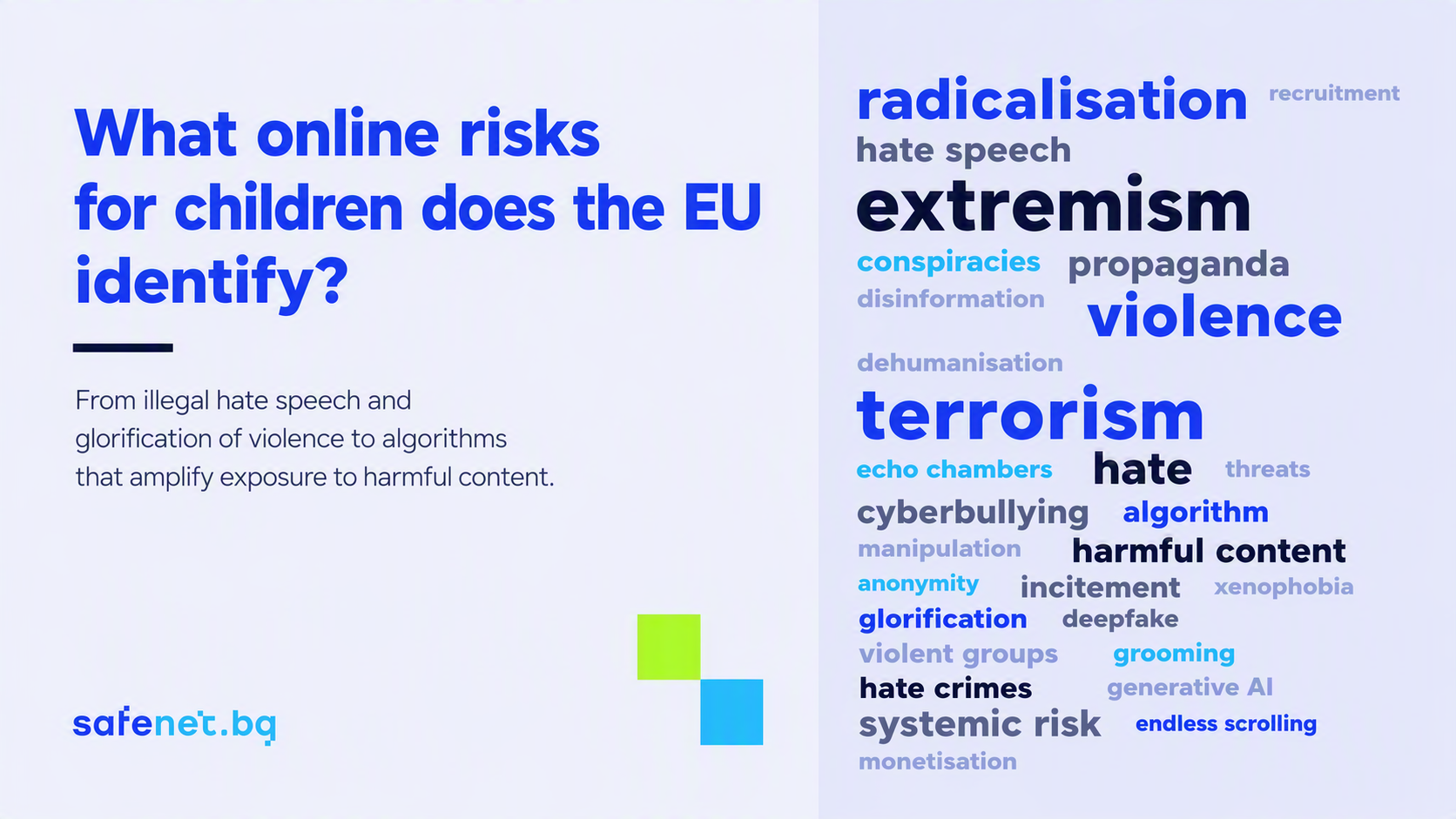
Algorithmic Amplification of Extremes: Radicalisation and Hate Speech
What it is: Hate speech itself is a human action, but content-recommendation algorithms—such as those used by YouTube, TikTok, Facebook and X—can act as a catalyst for it. They are programmed with one main goal: engagement optimisation. In other words, they aim to maximise the time we spend on platforms and our interactions with content.
Data show that people react most strongly to content that triggers fear, outrage, anger or a sense of belonging to “our group” against “their group”—that is, polarisation.
What it looks like online: When an algorithm detects that an extreme or aggressive video generates many comments, even negative ones, and holds attention, it automatically starts recommending it to more and more people. It does not understand that the content is harmful; it only sees that it is “engaging”.
The problem is not simply that someone has written something harmful somewhere on the internet. The problem is that the algorithm takes it and shows it to 100,000 people because it predicts that it will provoke them to react. Starting by recommending “dark jokes”, memes or insulting comments—such as those connected to cancel culture—the algorithm can gradually lead a user towards closed groups where aggression and dehumanisation are presented as normal or heroic.
Consequences: Extremely dangerous real-world outcomes. As the recent tragic case in Plovdiv showed, algorithmically amplified online radicalisation can lead to fatal physical violence. This is why digital-safety experts and lawmakers—including those working under the Digital Services Act (DSA)—pay such close attention to recommendation systems and require platforms to reduce this risk.
Dark Patterns
What they are: Deliberately confusing user-interface designs that manipulate you into doing something you do not want to do—or make it difficult for you to opt out of a service.
What they look like online: Hiding the button to unsubscribe, delete an account or turn off notifications behind multiple screens, small print and confusing questions. Another example is using huge, brightly coloured buttons for “Accept all” and grey, almost invisible buttons for “Decline” or “Customise settings”.
Consequences: Loss of personal data, consent to unwanted tracking, and a user’s sense of powerlessness and lack of control over their own digital space.
How Can We Take Back Control? Steps to Take
When we are informed, we can choose what we see and what we share.
What NOT to do:
- Do not spread harmful content—even if the intention is to condemn it or express public outrage. Every share feeds the algorithm and gives visibility to the aggressor.
What TO do:
- Train your algorithm: Actively use the “Not interested” and “Don’t recommend this channel” buttons.
- Clean up your history: Pause or delete your viewing history when you notice that an algorithm is pulling you into a “rabbit hole”.
- Report harmful or inappropriate content: Use the platforms’ own tools to block and report profiles that spread violence or hatred.
Technology is developing and changing at enormous speed. It is a challenge for all of us to keep up and to understand every new platform or algorithmic trick. This is not only a problem for individual families—Europe and the wider world are facing a wave of digital risks. That is why it is critically important for schools to actively support children through digital-competence programmes.
When and Where Should We Seek Help?
- The National Centre for Safer Internet (SafeNet): Contact us whenever you have a question, need advice or psychological support, or want to report an online problem. Call 124 123 or write to us through the online chat at safenet.bg. We are here to help children and parents with practical guidance on different platforms and specific risks.
- 112: Call immediately whenever there is a direct and imminent threat to life or health.
- GDBOP, Cybercrime Directorate: Contact the Cybercrime Directorate in cases involving the distribution of illegal content—for example, child sexual exploitation material—or serious cybercrime.
- The Communications Regulation Commission (CRC): The CRC is Bulgaria’s national Digital Services Coordinator. If an online platform, such as a social network or search engine, breaches the rules of the Digital Services Act—for example, by failing to remove illegal content after it has been reported, using dark patterns, or failing to provide adequate child-safety settings—you can submit a formal report to the Commission.
More useful SafeNet.bg articles on this topic
- Your Child Cannot Stop Scrolling? How Addictive Social-Media Design Works
- Violence Is Becoming Normal and Heroic Among Children. Where Do We Go From Here?
- When Online Content Normalises Violence: How to Talk to Children
- On the International Day Against Hate Speech: What It Is, What It Causes and What We Can Do
- Have We Become Used to Hate Speech? What Young People Do Not Know About Online Aggression
- Hate Speech on the Internet: Manifestations, Response and Prevention
- What Is Cancel Culture and How Can We Be Ethical Online?
- Six Red Flags for an Online Problem: Examples and Steps to Take
- How to Protect Children Online Without Becoming “Helicopter Parents”
- What Default Settings Should Platforms Use for Children Under the Digital Services Act?